What Sets Polar Apart from Garmin?
Polar didn’t just enter the heart rate monitor market — they created it. In 1977, on a cross-country ski track in Finland, the idea for a wireless heart rate monitor was born. A year later, Polar’s first commercial product hit the market. Garmin wouldn’t exist for another two decades.
Almost 50 years later, that pioneering spirit still shows up in the details. The Polar H10 chest strap is widely considered the gold standard for heart rate accuracy — it’s the device researchers reach for when they need a reliable reference point in published studies, not just a marketing claim.
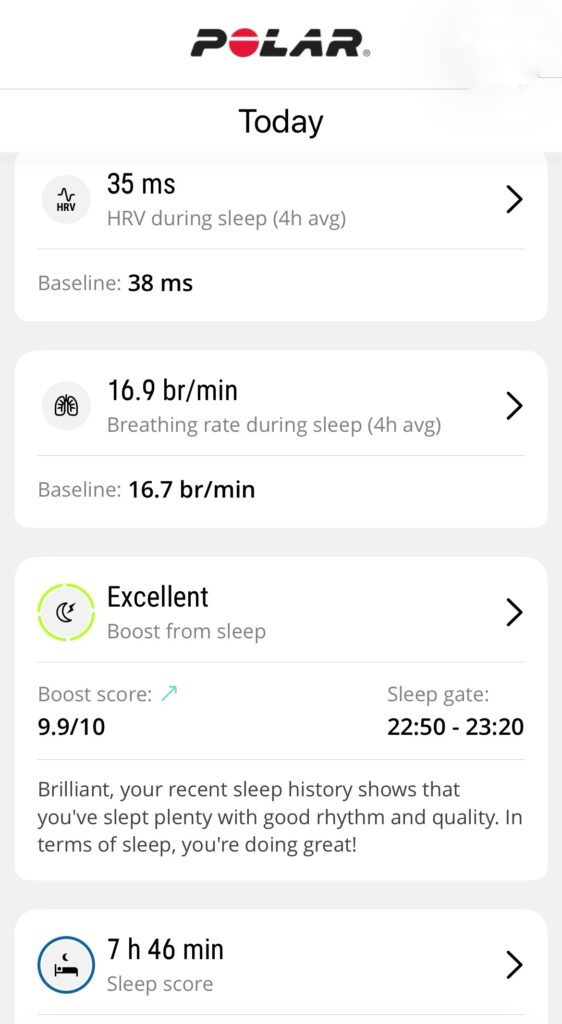
Sleep tracking is where I’ve noticed the difference most in my own experience. Many reviewers find Polar’s optical wrist models give a more detailed, more accurate picture of actual sleep than Garmin’s — not just how long you slept, but the quality of it.
Here’s my actual sleep data from last night, tracked with Polar.
That detail matters more to me than it might to most people. I’ve had a pacemaker since 2021, and knowing my heart rate and sleep data are as accurate as possible isn’t just nice to have — it’s something I genuinely rely on. When you’ve got hardware managing your heart’s rhythm, you want the device on your wrist telling you the truth.
Forty-eight years of refining one thing — accurate, dependable heart rate and sleep data — is exactly why I’ve trusted Polar for 40 of those years myself.
You can see my current picks in my Polar Heart Rate Monitor Store.

Rich Dafter is the founder of HowToBeFit.com, a lifelong runner, former ACE Certified Personal Trainer, BODi Coach since 2007, and Polar athlete and brand ambassador for 40 years. At 75, he continues to run, hike, strength train, and share practical strategies for fitness, strength, nutrition, longevity, and more. Learn more about Rich Dafter on the About page.