Comparing walking versus bicycling for longevity is an opportunity to explore the unique benefits of each type of cardio workout. Walking is a weight-bearing workout, and bicycling is a weight-supported workout, and that gives each one unique benefits.
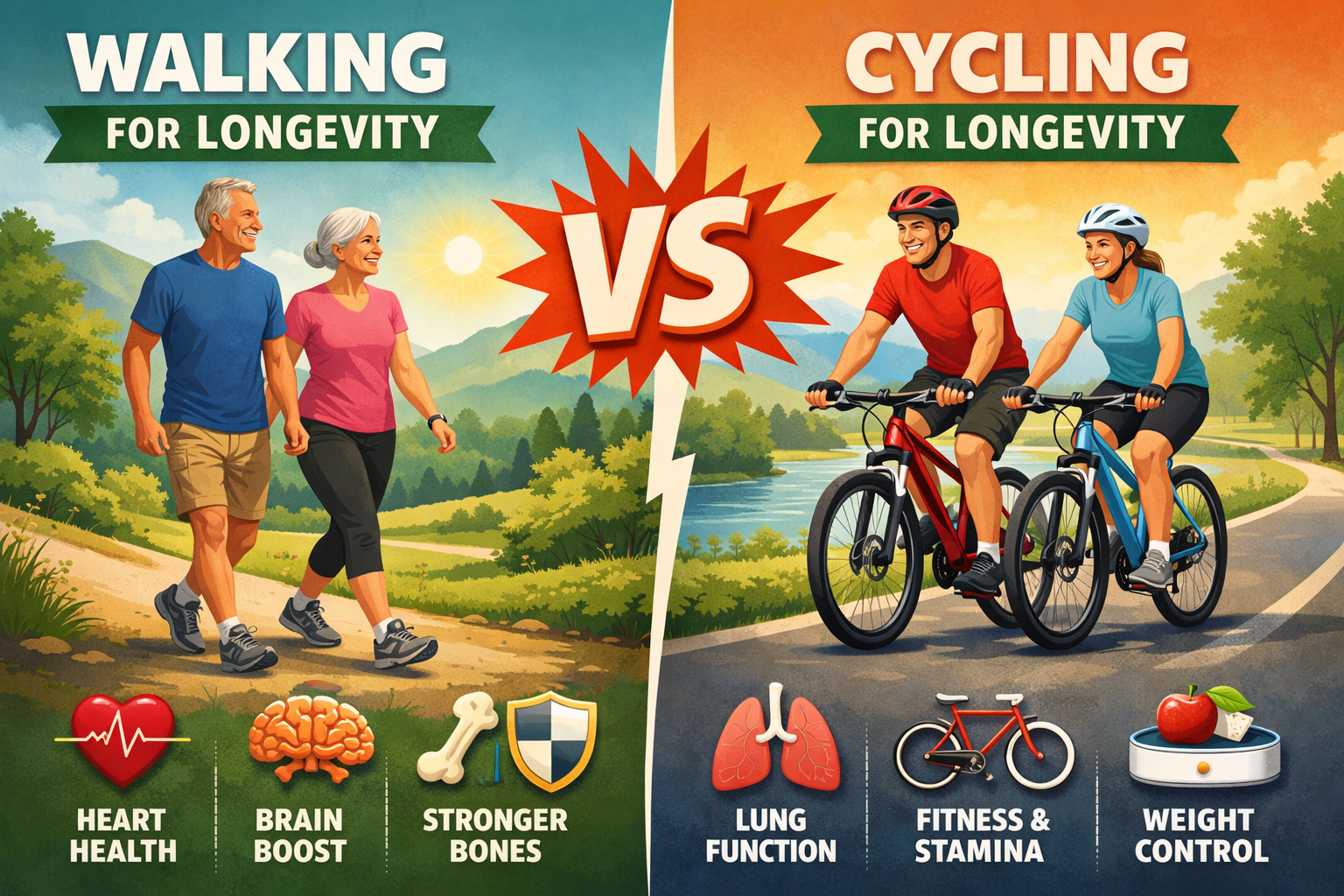
The Longevity Showdown Between Walking and Bicycling
In the quest for a longer, more vibrant life, we often look for “magic pills,” but the most effective longevity boosters are actually found in our garages or by our front doors. Walking and bicycling are the two titans of low-impact exercise, yet they offer distinct biological advantages.
If you’re deciding whether to lace up your sneakers or pump up your tires, here is how these two activities stack up in the race against time.
1. The Cardiovascular Edge: Efficiency vs. Accessibility
Both activities are “cardio” powerhouses, but they challenge the heart in different ways.
-
Bicycling (The Intensity King): Cycling typically allows for higher-intensity intervals. Research shows that vigorous activity—like pushing through a hilly bike route—can be more efficient at strengthening the heart muscle and lowering resting heart rate. A 2025 study highlighted that regular cyclists often have the cardiovascular profile of people years younger.
-
Walking (The Consistency Queen): While less intense, walking is the most sustainable form of movement. Because it’s easier to integrate into daily life (commuting, meetings, errands), walkers often accumulate more total active minutes per week. For longevity, consistency often trumps intensity.
The Verdict: If you are short on time, 20 minutes of cycling may offer more “bang for your buck” for heart health. If you prefer a slow-burn approach, a daily 45-minute brisk walk is equally life-extending.
2. Structural Health: Bone Density vs. Joint Longevity
This is where the two paths diverge most sharply.
Walking: The Bone Builder
Walking is a weight-bearing exercise. Every time your foot hits the pavement, it sends a signal to your bones to stay dense and strong. This is crucial for preventing osteoporosis and fractures in later life—a major factor in maintaining independence as we age.
Bicycling: The Joint Protector
Cycling is non-weight-bearing. For those with “crunchy” knees or hip issues, the bicycle is a godsend. It provides “motion as lotion,” lubricating the joints with synovial fluid without the repetitive impact of hitting the ground. Recent 2026 data suggests that lifelong cyclists are 21% less likely to develop symptomatic knee arthritis.
3. The Brain Boost: Cognitive Longevity
One of the most exciting areas of recent research is how movement protects the mind.
-
The Hippocampus Factor: Studies have shown that adults who walk at least 4,000 steps a day have healthier tissue in the hippocampus—the brain’s center for memory and learning.
-
Optic Flow: Walking outdoors creates “optic flow”—the visual sensation of the environment moving past you. This has been shown to naturally quiet the brain’s stress circuits, reducing the chronic cortisol that can “age” our neurons.
-
Coordination: Bicycling requires complex balance and split-second navigation. This “motor-cognitive” challenge keeps the cerebellum sharp, potentially staving off age-related declines in coordination.
4. Metabolic Impact and Weight Management
When it comes to burning fuel, the bicycle usually wins the sprint, but walking wins the marathon.
| Feature | Walking (Brisk) | Bicycling (Moderate) |
| Calories (per hour) | ~250–350 | ~400–600 |
| Primary Fuel | High fat-burning ratio | High carbohydrate/glucose burn |
| Muscle Focus | Calves, Core, Glutes | Quads, Hamstrings, Glutes |
Cycling is more effective for rapid weight loss and building lower-body strength. However, walking is superior for stabilizing blood sugar levels throughout the day, which is a key marker for metabolic longevity.
The Ultimate Longevity Strategy: The “Mix-and-Match”
Why choose one? The most recent 2026 studies from the BMJ suggest that variety is the secret sauce for a long life. Engaging in a range of activities is associated with a 19% lower risk of all-cause mortality compared to doing just one.
How to Build Your Longevity Week:
-
3 Days of Walking: Focus on weight-bearing bone health and mental “optic flow.”
-
2 Days of Cycling: Get your heart rate into the “vigorous” zone and build leg strength.
-
Daily “Micro-Movements”: Use walking for the “last mile” of your commute and cycling for longer errands.