This guide to myofascial release workouts explains the benefits of doing them and what specifically you can expect to get out of them. I am in P90X Generation Next Week 1, and the Day 7 workout is Myofascial Release, so I experienced the benefits firsthand.
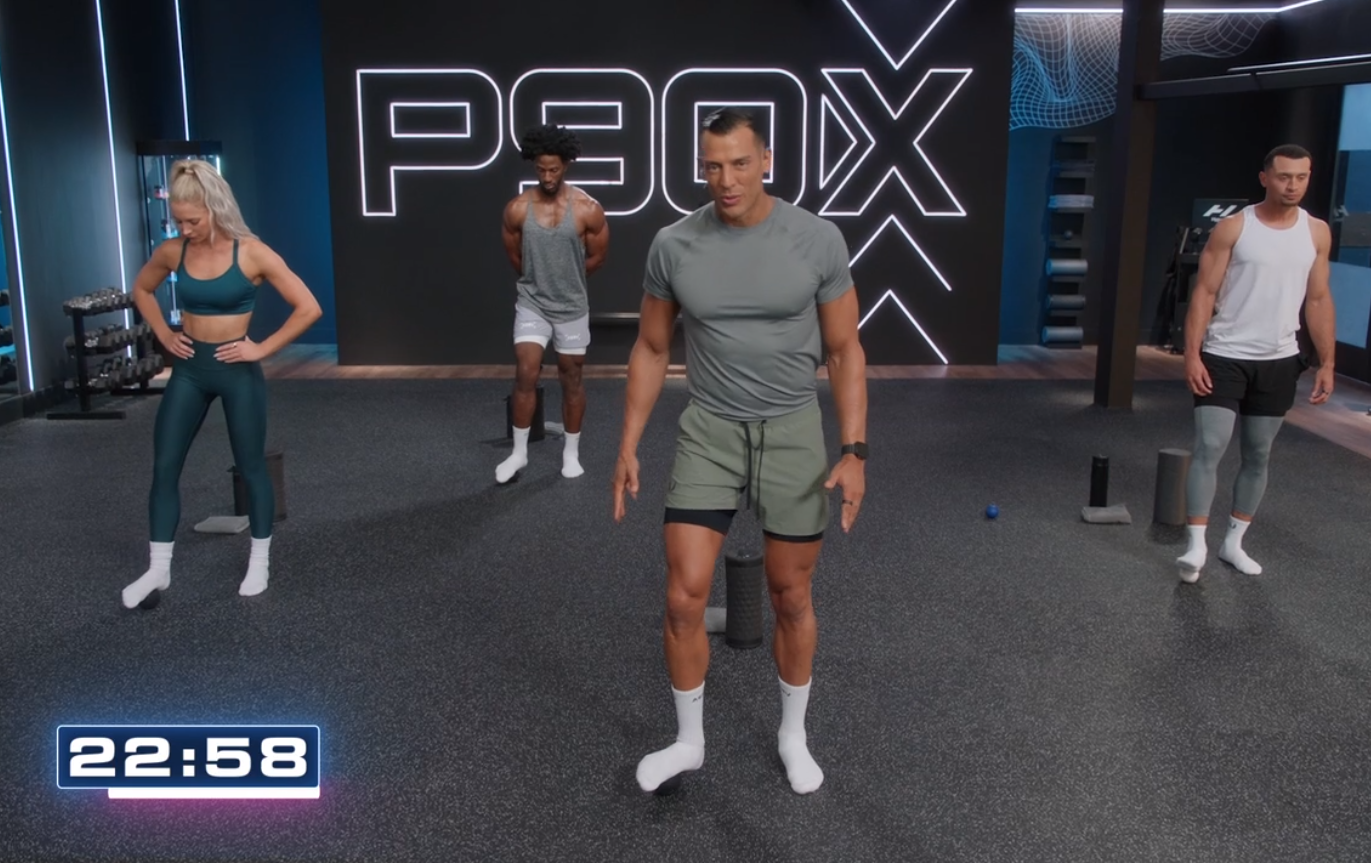
The Missing Link in Your Recovery: A Guide to Myofascial Release Workouts
We’ve all been there: you’re hitting your step goals, your cycling PRs are climbing, but your body feels like a tightly wound guitar string. You stretch, you hydrate, yet that nagging stiffness in your lower back or “glue-like” feeling in your hamstrings won’t budge.
Enter Self-Myofascial Release (SMR). It’s not just “rolling around on a foam log”; it’s a targeted workout for your connective tissue that might be the secret to moving like a 20-year-old well into your 80s.
What Exactly is “Fascia”?
Think of fascia as a biological 3D wrap. It’s a thin, tough, elastic type of connective tissue that wraps around most structures within the human body, including muscles.
When you’re stressed, dehydrated, or repetitive in your movements (like sitting at a desk or long-distance cycling), your fascia can become “tacky” or develop adhesions. These “knots” restrict your range of motion and can lead to chronic pain. Myofascial release is the process of applying gentle, sustained pressure to these points to eliminate pain and restore motion.
The Benefits: Beyond Just Feeling Good
While a Myofascial workout feels like a deep-tissue massage you give yourself, the physiological benefits are backed by 2026 sports science:
-
Improved Blood Flow: Pressure helps “flush” the tissue, bringing in fresh oxygen and nutrients.
-
Down-Regulating the Nervous System: SMR stimulates mechanoreceptors that tell your brain it’s okay to relax, reducing cortisol.
-
Increased Range of Motion (ROM): Unlike static stretching, which pulls on the muscle, SMR addresses the “casing” (the fascia), allowing the muscle to actually slide and glide.
-
Injury Prevention: By identifying “hot spots” before they become tears or strains, you stay in the game longer.
Your Myofascial Toolkit
You don’t need an expensive vibrating massage gun (though they are fun). You can start with these basics:
-
High-Density Foam Roller: Best for large muscle groups like quads, IT bands, and the upper back.
-
Lacrosse or Tennis Ball: Perfect for “trigger point” therapy in the glutes, arches of the feet, and shoulders.
-
The “Stick” Roller: Great for the calves and shins where you want more manual control.
The 15-Minute Myofascial Routine
Try this “workout” 2–3 times a week. Pro Tip: Never roll directly on a joint or your lower back (lumbar spine). Stay on the “meat” of the muscle.
1. The Glute Release (The “Achey-Breaky”)
-
Tool: Lacrosse ball or foam roller.
-
How: Sit on the roller, cross one ankle over the opposite knee (creating a “4” shape), and lean into the glute of the crossed leg.
-
The Move: Small, slow circles. When you hit a “hot spot,” breathe and hold for 30 seconds.
2. The Thoracic Extension (The Desk-Worker’s Savior)
-
Tool: Foam roller.
-
How: Place the roller horizontally under your shoulder blades. Support your head with your hands.
-
The Move: Gently lean back over the roller (don’t arch your lower back!). Inhale as you open your chest, exhale as you crunch up slightly.
3. The Quad Slide
-
Tool: Foam roller.
-
How: Face down, forearms on the floor, roller under one thigh.
-
The Move: Roll from just above the knee to just below the hip. If it feels too intense, keep the other leg on the floor to offload some weight.
Important Rules for Myofascial Success
Pain vs. Pressure: It should feel like “productive discomfort,” not sharp, stabbing pain. If you find yourself holding your breath or tensing your face, the pressure is too high. Back off.
-
Hydrate Immediately: Fascia is made mostly of water. Releasing “knots” is like squeezing a sponge; you need to drink water afterward to “re-plump” the tissue.
-
Slow is Pro: Moving too fast triggers a “stretch reflex,” causing the muscle to tighten up to protect itself. Move at a pace of about one inch per second.
Is it time to upgrade your recovery?
Myofascial release is the perfect “bridge” between the high-impact cycling and the steady-state walking we discussed earlier. It keeps the machine oiled so you can keep moving.