Chronic stress is like the thief of longevity and it will silently deplete your Health Retirement Fund quicker than most things. Scroll down to find out what stress does to your body and what you can do to create a longevity shield.
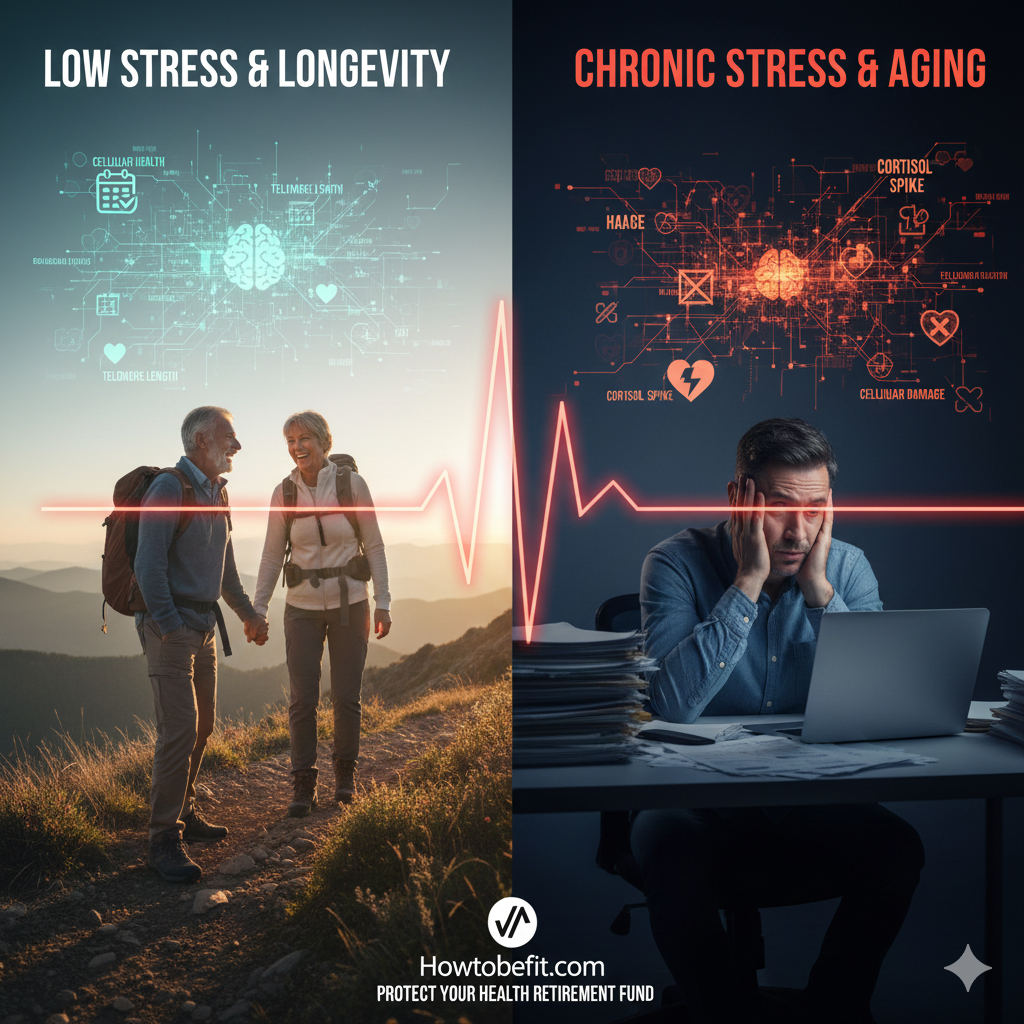
The Silent Thief of Longevity: How Chronic Stress Steals Your Future
At Howtobefit.com, we talk a lot about building your Health Retirement Fund through exercise and nutrition. But there’s a powerful, often unseen, force that can silently deplete that fund faster than anything else: chronic stress.
It’s not just about feeling overwhelmed; it’s about the relentless physiological toll that prolonged stress takes on your body, directly impacting your longevity and the quality of your later years.
The Biology of Burnout: What Stress Does to Your Body
Our bodies are designed for acute stress – the “fight or flight” response that helped our ancestors escape predators. But modern life often traps us in a state of chronic stress, where that emergency system is constantly engaged. This leads to a cascade of negative effects:
1. Hormonal Havoc (Cortisol Overload)
When stressed, your body floods with cortisol. While essential in short bursts, persistently high cortisol levels:
-
Impairs Sleep: Making it harder to get restorative rest.
-
Increases Belly Fat: Even in lean individuals.
-
Suppresses the Immune System: Making you more susceptible to illness.
-
Damages Brain Cells: Particularly in the hippocampus, affecting memory and learning.
2. Accelerates Cellular Aging (Telomere Shortening)
Think of telomeres as the protective caps on the ends of your DNA strands, like the plastic tips on shoelaces. They shorten with age, and chronic stress has been directly linked to accelerated telomere shortening. Shorter telomeres are associated with earlier onset of age-related diseases and a reduced lifespan.
3. Fuels “Cellular Rust” (Chronic Inflammation)
Chronic stress contributes to systemic inflammation, often referred to as “inflammaging.” This low-grade, persistent inflammation is a key driver of heart disease, type 2 diabetes, autoimmune disorders, and neurodegenerative diseases. It’s like a slow, internal fire constantly damaging your tissues.
4. Gut Health Degradation
The gut-brain axis is a two-way street. Stress negatively impacts your gut microbiome, leading to dysbiosis (an imbalance of gut bacteria). A compromised gut can lead to nutrient malabsorption, increased inflammation, and even impact your mood and mental clarity.
5. Cardiovascular Strain
Persistent stress keeps your heart rate and blood pressure elevated, puts a strain on your arteries, and increases the risk of heart attacks and strokes. Remember, being “Heart Strong” requires managing all inputs, not just physical activity.
Investing in Stress Resilience: Your Longevity Shield
Recognizing stress is the first step; actively managing it is your long-term investment. Here are key strategies:
-
Mindful Movement: Your Daily 2 Miles isn’t just for physical health; it’s a powerful stress reliever. The rhythmic nature of walking or running helps clear the mind and regulate the nervous system.
-
Prioritize Sleep: Non-negotiable. Aim for 7-8 hours of quality sleep. It’s when your body repairs, your brain detoxifies, and your hormones rebalance.
-
Mindfulness & Meditation: Even 5-10 minutes a day can re-train your brain’s response to stress. Apps and guided meditations make it accessible.
-
Social Connection: Strong social ties are a powerful buffer against stress and a key predictor of longevity.
-
Adaptogenic Support: Consider incorporating adaptogens into your routine. Ingredients like ashwagandha or rhodiola can help your body better adapt to and manage stressors.
Don’t Let Stress Steal Your Future
Your body is remarkably resilient, but it needs your help. Just as you wouldn’t neglect your financial retirement fund, don’t let chronic stress erode your Health Retirement Fund. By actively implementing stress management strategies, you’re not just improving your day-to-day well-being; you’re profoundly impacting how well and how long you live.