The benefits of the cat-cow pose include its ability to restore movement to the “rusty” parts of your back. It is such an easy and beneficial yoga stretch, and AI created a great way to remember it in the image below.
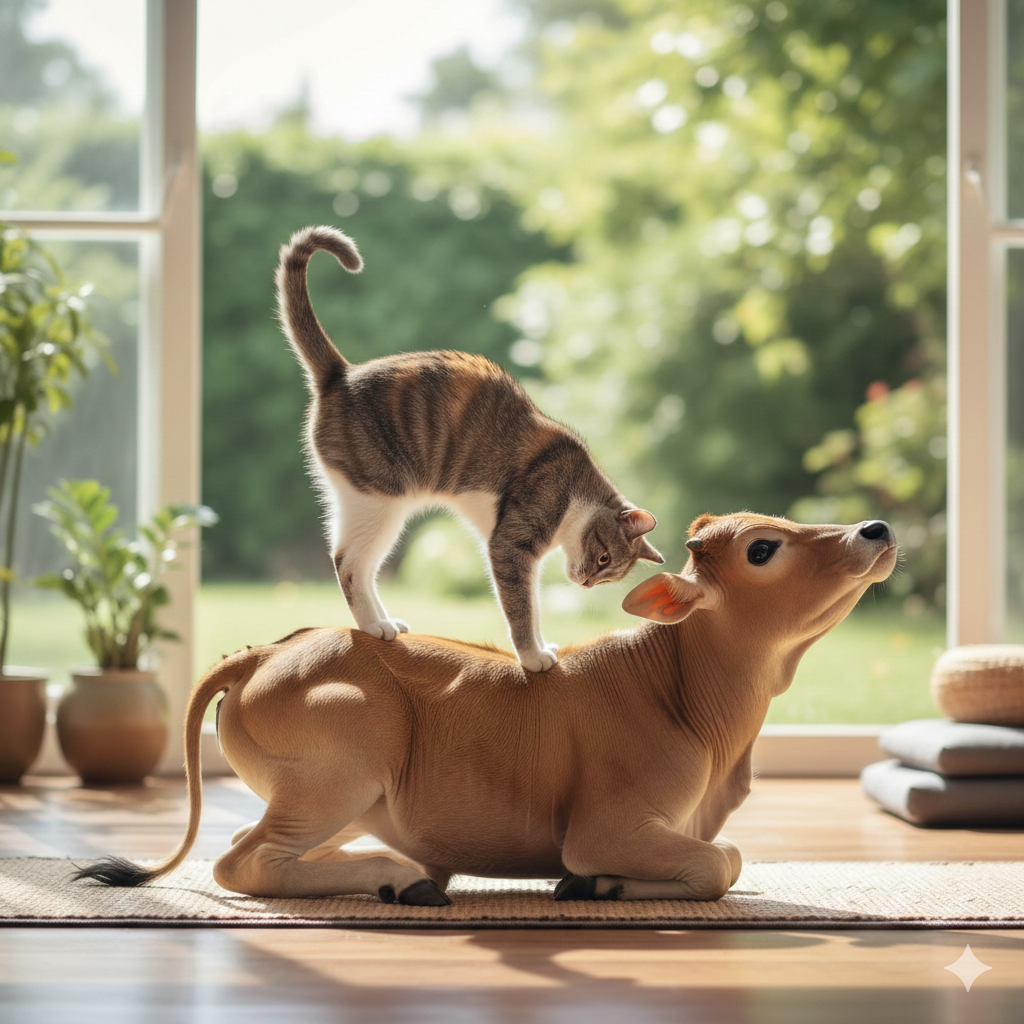
The Cat-Cow pose (or Marjaryasana-Bitilasana) is arguably the gold standard for functional spinal flexibility. While it won’t give you the deep stretch of a split or a backbend, its value lies in its ability to restore movement to the “rusty” parts of your back.
Here is a breakdown of how it impacts your flexibility and why it’s so effective.
1. Primary Targeted Areas
Cat-Cow is a “dynamic” stretch, meaning it uses movement to increase range of motion. It focuses on:
-
The Spine: It moves the vertebrae through flexion (rounding) and extension (arching).
-
The Hips & Pelvis: The movement actually starts at the tailbone, helping to loosen the hip flexors and pelvic floor.
-
The Neck & Shoulders: It releases tension in the trapezius and cervical spine, which is where most people “hold” stress.
2. Why It Is So Effective
-
Lubrication: The rhythmic movement helps circulate synovial fluid, which acts like oil for your spinal discs and joints. This reduces the “crunchy” feeling many people have in the morning.
-
Decompression: By alternating between the two shapes, you create space between the vertebrae, which helps alleviate the compression caused by sitting at a desk all day.
-
The Breath Connection: Because you synchronize the movement with your breath, your nervous system signals your muscles to relax, allowing for a deeper range of motion than a static stretch might provide.
3. Comparing “Cat” vs. “Cow”
| Pose | Primary Action | Flexibility Benefit |
| Cat (Round) | Spinal Flexion | Stretches the back body, including the erector spinae and the space between shoulder blades. |
| Cow (Arch) | Spinal Extension | Stretches the front body, including the abdomen, chest, and throat. |
Pro-Tip: “Segmented” Cat-Cow
If you want to take your flexibility to the next level, try Segmental Cat-Cow. Instead of moving your whole back at once, try to move one vertebra at a time—starting from your tailbone and slowly “zipping” the movement up to your neck. This builds incredible motor control and targets specific “stuck” spots in your spine.
Note: If you have a recent back injury or a “slipped” disc, check with a pro first. Sometimes deep flexion (Cat) or extension (Cow) can aggravate certain conditions.