Muscle mass and body weight are important because the natural loss of muscle mass with aging, known as sarcopenia, begins as early as our 30s. Not when you are older and less active. It starts in the middle of our lives and accelerates as we get older.
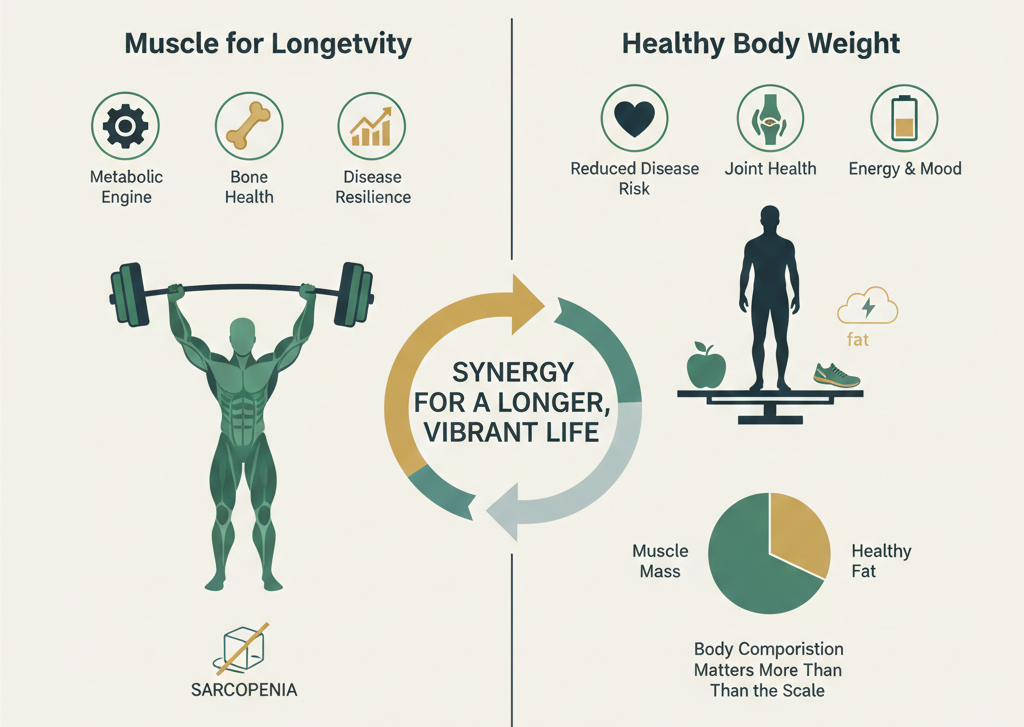
Why Muscle and Body Weight are Your Longevity Allies
When we talk about fitness, the conversation often gravitates towards weight loss, cardio, or achieving a certain aesthetic. But what if I told you that two often-misunderstood metrics – your muscle mass and your body weight (in a nuanced way) – are among your most powerful allies for a long, healthy, and vibrant life?
It’s time to shift our focus from just “losing weight” to “optimizing body composition.” Let’s dive into why muscle and a healthy body weight are critical for longevity.
The Powerhouse: Why Muscle is Non-Negotiable for Longevity
Think of muscle as your body’s personal power plant. It’s not just for lifting heavy things or looking good; it’s a metabolic and protective workhorse.
-
Metabolic Engine: Muscle is metabolically active, meaning it burns more calories at rest than fat. The more muscle you have, the higher your resting metabolism, which helps manage body fat, blood sugar, and overall energy balance. This directly combats metabolic diseases like Type 2 diabetes.
-
Strength and Functionality: This is perhaps the most obvious benefit. Strong muscles allow you to perform daily activities with ease – carrying groceries, playing with grandkids, climbing stairs, or simply getting out of a chair. As we age, maintaining functional strength is paramount for independence and quality of life.
-
Bone Health: Muscles pull on bones, stimulating them to become stronger and denser. This is crucial for preventing osteoporosis, a condition that makes bones brittle and prone to fractures, especially in older adults.
-
Balance and Stability: Strong core and limb muscles are essential for balance and coordination. This significantly reduces the risk of falls, which can have devastating consequences as we age.
-
Disease Resilience: Emerging research shows that higher muscle mass is associated with better outcomes during illness, surgery, and even cancer treatment. It provides a reserve of protein and energy that the body can draw upon during times of stress.
The Threat: Sarcopenia
The natural loss of muscle mass with aging, known as sarcopenia, begins as early as our 30s and accelerates past 50. Left unchecked, sarcopenia leads to weakness, frailty, and a diminished quality of life. This is why resistance training becomes even more critical as we get older.
The Balancing Act: Understanding Body Weight for Longevity
“Body weight” can be a loaded term. The goal isn’t necessarily to be “lightest,” but to achieve a healthy weight range that supports your body composition and overall health.
-
Optimal Body Mass Index (BMI): While BMI has its limitations (it doesn’t account for muscle mass), it’s a general indicator. Being within a healthy BMI range (typically 18.5 to 24.9) is associated with lower risks of many chronic diseases. However, a highly muscular individual might have a higher BMI and still be very healthy.
-
Reduced Chronic Disease Risk: Carrying excessive body fat, particularly visceral fat (around your organs), is strongly linked to heart disease, stroke, Type 2 diabetes, certain cancers, and sleep apnea. Maintaining a healthy body weight helps mitigate these risks.
-
Joint Health: Less excess weight means less stress on your joints, particularly your knees, hips, and spine. This helps prevent osteoarthritis and preserves mobility.
-
Energy Levels and Mood: A healthy body weight, supported by good body composition, often translates to better energy levels, improved sleep, and enhanced mood.
The Nuance: It’s Not Just a Number on the Scale
Focusing solely on the number on the scale can be misleading. Two people can weigh the same, but one might have significantly more muscle and less fat, making them far healthier. This is where body composition comes in. Aiming for a healthy percentage of body fat (typically 20-30% for women and 10-20% for men, with variations based on age and activity) is more important than a specific weight.
The Synergy: Muscle + Healthy Body Weight
The true magic for longevity happens when muscle mass and a healthy body weight work together.
-
Strong muscles help you maintain a healthy body weight by boosting metabolism and making physical activity easier and more enjoyable.
-
A healthy body weight reduces the burden on your body, allowing your muscles to function more efficiently and reducing the risk of injury.
Your Action Plan for Longevity
-
Prioritize Resistance Training: Aim for 2-4 sessions of full-body strength training per week. Use weights, resistance bands, or your own body weight. Focus on compound movements.
-
Eat Enough Protein: Protein is the building block of muscle. Ensure you’re consuming adequate protein at each meal to support muscle synthesis (around 0.7-1 gram per pound of target body weight).
-
Incorporate Cardio: While muscle is key, cardiovascular health is also vital. Aim for 150 minutes of moderate or 75 minutes of vigorous cardio per week.
-
Maintain a Balanced Diet: Focus on whole, unprocessed foods. This supports overall health and helps manage body weight.
-
Get Adequate Sleep: Sleep is crucial for muscle repair, hormone regulation, and overall well-being.
-
Stay Hydrated: Water is essential for every bodily function, including muscle performance.
Don’t let the scale be your sole measure of success. Embrace the journey of building and maintaining muscle, and working towards a healthy body composition. Your future, stronger, more capable self will thank you for it.