Functional aging is the new goal of longevity because what good is a long life if we’ve lost strength and mobility? For a long time, the fitness world was obsessed with how a body looked. We chased lower body fat percentages and bigger biceps. But as we move further into 2026, the conversation has shifted toward something far more valuable: functional aging.

Functional aging is the ability to maintain the physical and mental capacity needed to do the things you enjoy—and the things you need to do—as you get older. It’s the difference between simply “being alive” and “feeling alive.”
At Howtobefit.com, we view functional aging as the ultimate reward for investing in the Four Pillars of Health and Fitness.
What is Functional Age vs. Chronological Age?
Your chronological age is the number of candles on your birthday cake. Your functional age is how your body actually performs. You might be 60 years old but have the mobility, heart health, and strength of someone in their 40s.
The goal of functional aging is to bridge the “healthspan” gap—ensuring that your final decades are spent active and independent rather than sidelined by preventable physical decline.
The Key Components of Functional Aging
To age functionally, we have to move beyond just “going for a walk.” We need to target the specific areas that tend to decline after age 50:
1. Sarcopenia Prevention (Muscle Retention)
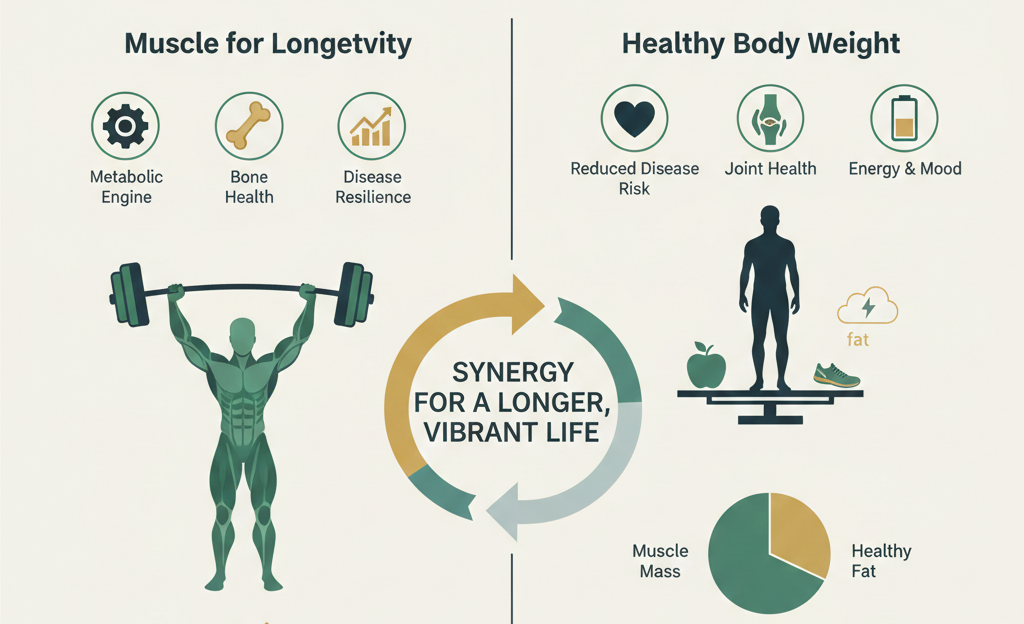
Sarcopenia is the natural loss of muscle mass as we age. Muscle is more than just strength; it is a metabolic organ that regulates blood sugar and protects your joints.
-
The Strategy: Consistent resistance training. You don’t need to be a bodybuilder, but you do need to challenge your muscles to keep them.
2. Bone Density and Power
As we age, we often lose “power”—the ability to move quickly. Power is what helps you catch your balance if you trip on a curb.
-
The Strategy: Incorporate “explosive” but safe movements, like fast-paced chair squats or kettlebell swings, to keep those fast-twitch muscle fibers active.
3. Joint Mobility and Balance
Stiffness isn’t an inevitable part of aging; it’s often a result of disuse.
-
The Strategy: Prioritize “active” flexibility. Yoga, Tai Chi, and simple daily stretching routines keep the synovial fluid moving in your joints and sharpen your proprioception (your brain’s awareness of where your body is in space).
4. Cognitive Reserve
Physical health and brain health are inextricably linked.
-
The Strategy: Aerobic exercise (Endurance) increases blood flow to the hippocampus, the part of the brain responsible for memory.
How to Start “Training for 80” Today
If you want to be hiking, traveling, and playing with your grandkids decades from now, you have to train for it today.
-
Audit Your Movement: Are you moving in all planes of motion? (Forward, backward, side-to-side, and rotating?)
-
Protein is Your Friend: To fight muscle loss, your nutrition must support your strength pillar. Prioritize high-quality protein at every meal.
-
Embrace the “Micro-Move”: Don’t have an hour? Do five minutes. As we say at Howtobefit, “Exercise Snacks” keep the metabolism flexible and the joints greased.
Your Health Retirement Fund
Think of functional aging as your physical 401(k). Every squat, every healthy meal, and every hour of deep sleep is a deposit. The earlier you start, the more “interest” you accrue in the form of energy and independence later in life.
Ready to lower your functional age? Our Team Howtobefit community specializes in longevity-focused programs that meet you where you are today.